

Owning Your Truth
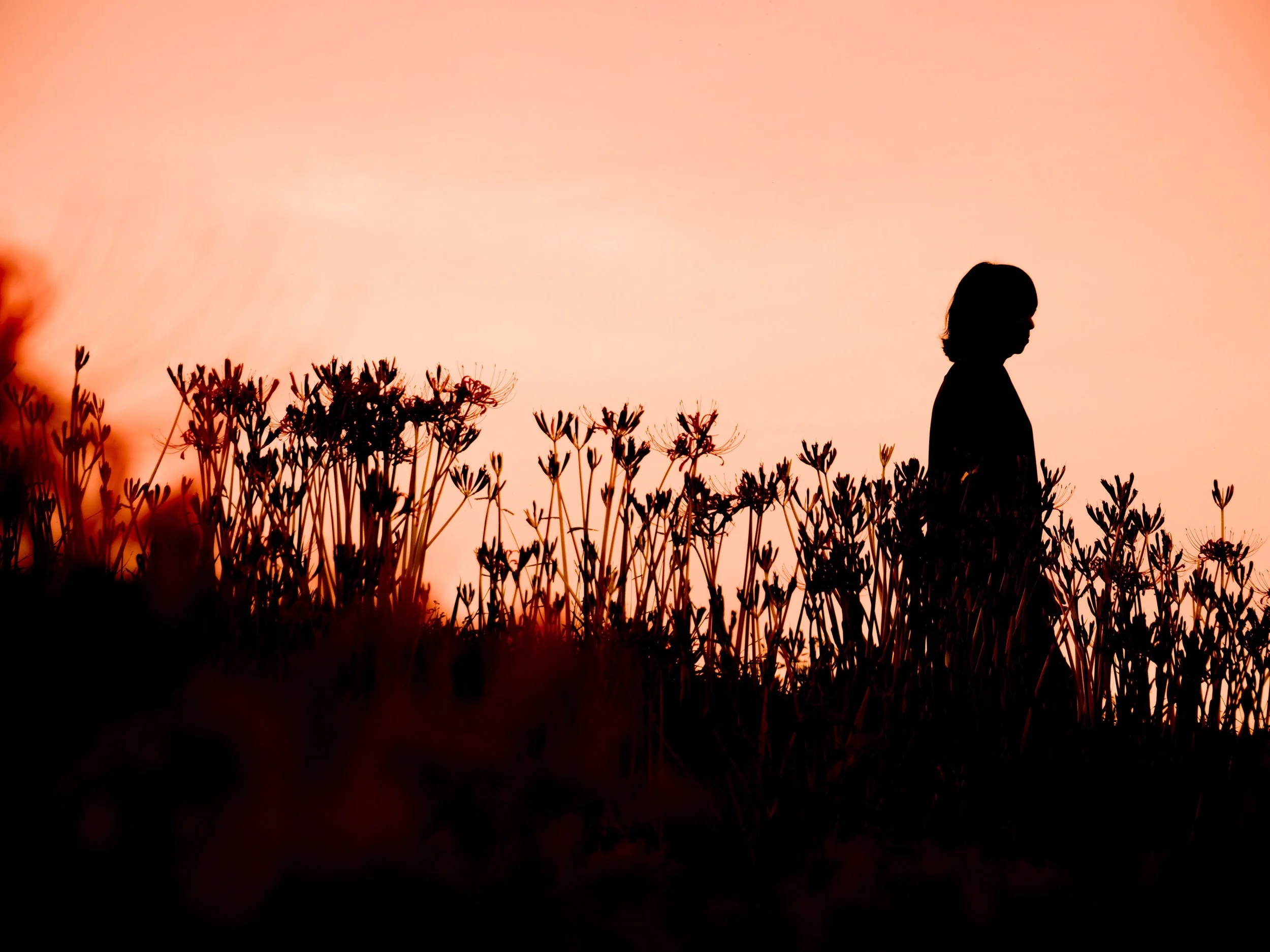
Freedom Through Self-Expression
Twenty-eight years. That's how long I kept a secret that wasn't even mine to carry.
I was forty years old, sitting in a leadership program, talking about Viktor Frankl’s Man’s Search for Meaning of all things, when it just... came out. Not planned. Not therapeutic. Not in a room designed for confessions. We were discussing how Frankl could recall the tiniest details of his surroundings inside a concentration camp, and someone said they couldn't imagine remembering anything in the middle of all that horror.
I could.
My mind went straight to a school bathroom. I was twelve. I still know the color of those tiles. The smell. The way the grout felt. Details I had never, not once, spoken out loud. I interrupted the group and said I get it. I said the brain does that on purpose. Pulls your attention to the room, to the texture of things, keeps you just present enough to survive but not present enough to fully break.
The facilitator walked out with me afterward. Quiet. He asked just one thing.
Have you ever said that before?
No. Never.
Without a single word of advice, he offered me more compassion than I knew was possible from another person. And something cracked open. Not all at once. Slowly. The way things that have been sealed shut for almost three decades tend to move.
The Cost of Going Quiet
Here's the thing nobody talks about. Silence isn't always passive.
Before I found any kind of real voice, I wasn't quiet in the way people imagine when they picture someone swallowing their truth. I was loud sometimes. Angry. That scared little girl and the young woman she became would lash out, push people away, create distance before anyone could get close enough to see the parts I was hiding. That anger wasn't self-expression. It was self-protection wearing a very convincing costume.
Surviving childhood sexual assault. Getting out of a domestic violence relationship. Being married to an addict. These are the experiences that taught me, deep in my bones, that staying small was survival. You learn that lesson well enough and it becomes automatic. You don't even notice you're doing it anymore.
Research backs up what trauma survivors already know in their bodies. A peer-reviewed study in the journal Behavior Therapy found that people with histories of childhood trauma are significantly more likely to suppress emotional expression, and that suppression creates real, measurable barriers to forming close relationships while increasing risk for anxiety and depression. And a PubMed study put it plainly: silence intensifies trauma. What goes unspoken doesn't dissolve. It finds somewhere else to go.
I lived that. For a long time.
Just Be You. Keep Smiling.
My dad said two things to me my whole life. Just be you. And keep smiling.
I brushed it off for years. Sounded like the kind of thing people needlepoint on pillows. But he was onto something that took me four decades to actually understand. Being fully, authentically yourself is one of the most rewarding and genuinely difficult things a person can achieve. And doing it while staying open, while choosing not to close off, while keeping that smile real instead of performative? That's the whole work right there.
What I learned, slowly and then all at once, is that there is more risk in hiding than in being seen. More damage done by the silence than by the truth. Self-acceptance isn't soft. It's the most powerful thing I've ever experienced.
I am not the things that happened to me. I am who I became because I survived them. Because I stopped letting the wound have the last word.
Now. I need you to hear something important.
Finding your voice doesn't happen in a dramatic room-full-of-strangers moment for most people. It probably won't for you either. And that's not a flaw in your story. Sometimes finding your voice is words scratched into a journal at 2am. A prayer in a parking lot. A drawing no one ever sees. A long walk where the only thing, you're accountable to is your own thoughts. Flour on your hands. A sweater taking shape stitch by stitch.
Self-expression isn't about the audience. It's about the outlet that gives you back to yourself.
Dr. James Pennebaker's research at UT Austin showed that writing about emotionally difficult experiences for just twenty minutes over three to four days produced real improvements in psychological and physical health, including immune function changes and reduced healthcare use. Twenty minutes. Not a year of therapy. Not a breakthrough in a leadership program. Twenty quiet minutes on a page.
We are, every one of us, in a constant state of becoming. The outlet is just the door.
Microbravery™ in Action
You don't have to start big. You really don't. Here are five small acts of self-expression that compound into something real.
Name it before you share it. Give your truth a shape before you give it a voice. Five minutes. Just you and a piece of paper. No editing, no performing, no thinking about how it sounds. What's true right now? Write that.
Find your non-verbal outlet. Voice doesn't have to mean words. It can be a paintbrush, a pair of running shoes, a guitar you barely know how to play, bread dough. Find the one thing that makes you feel most like yourself and do it this week. Even twenty minutes counts.
Let one person actually see you. This is called Match +1. You meet someone where they are and offer just one degree more of yourself. Not a confession. Not your whole story. Just one small, real thing. That's how trust gets built. One honest exchange at a time.
Notice the silence. Pick one moment this week when you went quiet and you knew you had something to say. You don't have to say it yet. Just write it down. Somewhere private. Awareness is the first move. You can't reclaim what you haven't yet acknowledged.
Rewrite the sentence you've been telling yourself. You are not what happened to you. Finish this one: Because of what I survived, I am... Write it. Read it every morning for seven days. See what shifts.
You Are Not Behind
It took me forty years and a room full of strangers and a book about the Holocaust to finally let that twelve-year-old girl speak. I don't say that as a cautionary tale. I say it because wherever you are in your own becoming, you're not late.
Maybe your opening looks nothing like mine. Maybe it's a diagnosis. A layoff. A relationship that finally ended. A prayer you've been putting off. One honest sentence written in the dark on a Tuesday night when no one is watching.
Life puts you exactly where you are supposed to be.
And that woman just being herself, the one still figuring it out, still finding her outlet, still learning what her voice even sounds like? She is pretty amazing. Trust me on that one.
If you're here, reading this because some part of it sounds familiar, you are not broken. You are not alone. You are in process. And that is exactly the right place to be.