

Gentle, Not Weak
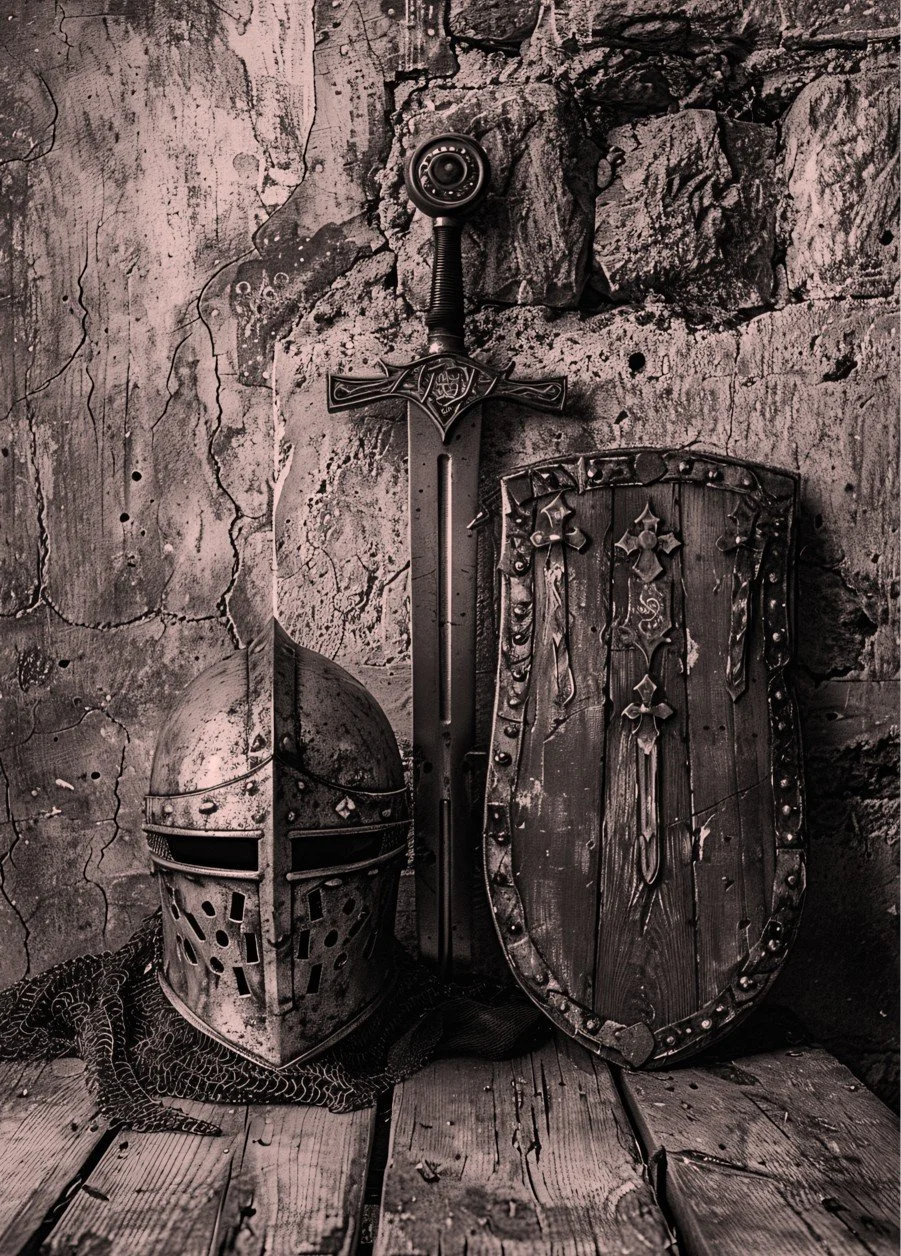
Strength Forged
Through Survival
It's the hell I've survived that makes me gentle.

People's biggest mistake is confusing my self-control with weakness. The beast inside me is sleeping, not dead. That ferocious part that allowed me to survive in the darkest moments is still there. I just never want it to come out. It's full of rage and vengeance, and that's not a place I want to live. But I wasn't always this way.

For a long time, I was hardened by what I'd been through. I put up walls, donned armor, wore a mask. I never let anybody see the real me. It was all in the name of survival. And by the time I reached forty years old, I recognized that continuing to live that way, carrying things that were never mine to carry, wasn't going to give me the life I wanted. The life, that deep down in the dimmest light, I still believed I deserved.

So, I began to heal. And in that healing, I learned something that goes against everything our culture teaches us about strength: that being gentle is not weakness.

It's one of the hardest things I've ever done.
Surviving with Armor
At twelve years old, I survived multiple sexual assaults. It changed me. Even with a wonderful family and a strong support system, it sent me down a path I wouldn't wish on anyone. It had me growing up faster than any little girl should. It gave me a warped sense of self, a deeply negative self-image, and a profound lack of self-worth.
That shame became compounded with every new adversity. Being diagnosed as dyslexic in my late teens. An abusive relationship in my college years. A layoff that left me questioning my identity and value. A marriage that ended in the wake of my husband's drug addiction. I took these hits and many more.
And even though most of what I lived through wasn't my fault and I couldn't control it, I carried it all. The shame. The hurt. The belief that somehow, I deserved it. So, I hardened. I built walls so thick that nothing could get through. Not pain. But also, not joy. Not betrayal. But also, not connection. Not loss. But also, not love.
I became a person I didn’t recognize. I was angry. I lashed out. I couldn't control my emotions and people around me suffered. Not just my family and friends, but people at work. Strangers on the road when internal road rage would work me up, raise my blood pressure, spin me out.
Society tells us to stay strong. Toughen up. Don't let them see you sweat. We equate hardness with strength. We confuse vulnerability with weakness. And I believed it. The armor that protected me also imprisoned me.
What Walls Keep Out
In her latest book, Strong Ground, Brené Brown writes about this moment of "intense technological and cultural upheaval" where "the constant need to self-protect is driving the humanity right out of us." She emphasizes that we need "the courage to lead people in a way that honors and protects the wisdom of the human spirit."
Every second I spent polishing my armor was another second spent alone, disengaged from my life.
I learned the hard way that you can't numb selectively. When you build walls to keep pain out, you also keep out a lot of other things. Brown's research shows that "you can't numb fear without numbing joy at the same time." Numbing is dangerous because it has a widespread effect.
When you're armored, when you're still surviving, it's difficult to see the beauty in life. To see the blessings. To see the light when you're in the middle of darkness. You can't really feel grateful - not deeply, not with intention.
Healing Begins with Gratitude
We've made gratitude so big. This performative thing where we’re supposed to be thankful for our health, our family, our home. But when we’re numb, when we’re in survival mode, those ideas feel impossible to access.
For me, gratitude didn’t start big. It was really small stuff, tiny even. Like a friend who reminded me how grateful she was for the ‘good’ ice in her tea on a hot summer day. Tiny, yet concrete joys are the ones that sneak through the cracks in our armor. Then all of a sudden, I found myself grateful that I woke up on this side of the dirt and that’s when I began to understand how seemingly inconsequential things add up over time.
Gratitude isn't simply a practice; it's permission to soften. Each time we pause to notice something small and good, we’re making ourselves vulnerable to feeling something positive. We’re lowering your defenses just enough to let beauty in.
Choosing Tenderness Anyway
With that crack in my armor exposed, I started to see clearly. At forty, something clicked. I realized I didn't need to keep carrying the hurt. The people who hurt me - that was theirs to carry. Getting hurt wasn't my fault. But healing? That was my responsibility. Only I could do that.
So, I made a decision that terrified me: it was time to deconstruct the walls I had built, to set down my armor.
I didn't wake up one morning and tear everything down. It happened slowly, stone by stone. I let one person see me cry. I admitted when I was struggling instead of pretending, I had it all together. I stopped responding to every situation with the rage that had become my default. I began to lower the drawbridge. And eventually, I found the courage to step outside the walls entirely.
But here's what no one tells you about choosing tenderness: it comes with inherent risk. There are days I get hurt because I made this choice. People disappoint you. They betray your trust. They take advantage of your openness. The world doesn't suddenly become safe just because you decide to be vulnerable.
The alternative, though - living closed off from all the beautiful, wonderfully happy emotions and moments of life - I couldn't do that anymore.
Strength with Boundaries
Tenderness is not passivity. Softness is not surrender.
Choosing to be vulnerable doesn't mean accepting bad behavior. It doesn't mean letting people walk all over you. It doesn't mean ignoring your gut when something feels wrong. It means doing the work to trust yourself. To listen to your intuition.
And sometimes that intuition tells me to pick the armor back up. To retreat behind what's left of the wall. There are days where I need that protection, and I've learned not to shame myself for it. I evaluate each situation, each interaction, and determine the best way to show up for myself and for others. Other days, I take the armor off because I feel strong enough to stand in front of somebody who's still wearing theirs.
This is the part people misunderstand about vulnerability. They think it means you have no boundaries. But I'm a firm believer in this: that which we permit, we allow. It's an active choice to tolerate bad behavior.
I respectfully challenge people when they've treated me badly. I remove myself from friendships and work interactions that aren't healthy, that aren't based on trust. I let people know that if they want to be in my life, certain behaviors are acceptable and certain ones aren't.
I make mistakes and acknowledge that others can make mistakes, too. There's a difference between a mistake and manipulation. A mistake followed by acknowledgment and change? That's human. We can hold space for that with tenderness. But a pattern of harm with no accountability? That's when I make the tough decision to let someone go. At the end of the day, I have to be in a relationship with myself for the rest of my life. And I'm not going to compromise that relationship by tolerating people who don't honor it.
My gentleness doesn't come from naivety. It comes from deep knowledge about what else is possible. That ferocious part that allowed me to survive - it's still there. I just choose not to let it run my life anymore.
Choosing Peace
Here's the truth: life is hard. Being human is hard. It was never meant to be easy.
You're going to expend energy every single day. That's not a choice. The choice is how you use it.
You can use your energy maintaining the walls. Polishing the armor. Staying on high alert for the next threat. Living in rage and calling it self-protection. Lashing out at the people around you because you're too afraid to feel anything else. Or you can channel that energy into something different. Into vulnerability. Into courage. Into the slow, difficult work of healing. I chose the latter. And in making that choice, I reclaimed what I lost. I reconnected with the person I was always meant to be. I rediscovered the parts of me that were always inherently there, just buried deep inside.
That little girl who was empathetic and intuitive. Who some people called a bleeding heart. I even had a friend who once asked me, "When are you going to stop bringing home birds with broken wings?" He wasn't referring to actual birds, but to people. Even before I knew what it felt like to be unwanted and discarded, there was always a part of me that understood the power of belonging. When you know how horrific it feels to be on the outside, you never want anyone else to experience it.
Reclaiming what was taken doesn't mean excusing other people's behaviors or forgetting what happened. It's reframing what life looks like in spite of those things. It's choosing to be in control of your own emotions and choosing to find joy.
Now? I channel my energy differently. Into creating peace. Into being welcoming - for myself and for the people around me. Into building spaces where others, when they're ready, can feel a sense of belonging. Not in fortifying defenses, but in opening doors. Not in maintaining isolation, but in fostering connection. Not in polishing armor, but in cultivating peace.
This doesn't mean I never get tired. This doesn't mean it's easy. It does mean I'm finally living instead of just surviving.
What Strength Really Means
Here's what healing has taught me about strength and softness. These are the lessons I wish someone had shared with me when I was just beginning to deconstruct my walls.NO ONE CAN HEAL FOR YOU. Each human must choose their own path of healing and self-discovery. If I could have healed another person, I would have had a sober husband. But I couldn't walk that path for him, and no one can walk it for you.TRUST YOUR INTUITION. The more I've set my armor aside, the more I've had to lean into trusting my own gut. I evaluate each situation I find myself in, each new interaction with somebody helps me determine the best way to show up for myself and for them.EMOTIONS ARE YOUR SUPERPOWER. Not the emotions themselves, but your ability to control them. Because of what I've survived, I've learned to regulate what I feel without numbing it entirely and so can you. That emotional control is strength.CONNECTION IS HOW WE HEAL. Your innate ability to connect with lots of different people, to see their humanity; that doesn't make you weaker. That makes you stronger. Not just for yourself, but for those who haven't yet built the same resilience.GRATITUDE IS MORE THAN BEING THANKFUL. It's about being vulnerable enough to feel. Present enough to notice the small joys, one by one, until you're living in an abundance of them.
I return to these truths on the days when I'm tempted to pick up the armor. They remind me why I chose this harder, softer path.
If You’re Still Surviving
Maybe you're reading this from inside your walls. Maybe you're armored up and can't imagine any other way to be. Maybe the idea of being tender feels dangerous or naive or simply impossible given what you've survived. The truth is I don't know what built your walls or when you first put on your armor. But I know they're there for a reason. The wounds that made you need them - they're real. They matter. And I’d never ask you to tear it all down today.
But, if that's you, I want to say this: job well done. Many people don't survive what you've survived. But you have. You're a warrior. You've been fighting every step of the way. And, yes. There's a time and a place to live in your warrior. But even warriors put down their swords. Warriors need rest too.
Can you, just for a moment, put down the sword? Can you find one thing that tethers you to the person you know you were always meant to be, deep down in the core of who you are? Can you take a moment and show that small human grace?
If you can do that, I'm confident that with intentionality, you can build a beautiful life.
Start with one small thing. One small joy. One moment where you notice something good. One tiny crack in the armor where light can get in. I'm not asking you to shed your armor completely.
I'm just asking you to consider: what if being tender isn't weakness? What if it's the bravest thing a person who's been through hell can do?